


The Scientific Imperative for Reforestation in Somalia

Restoring the Green Canopy
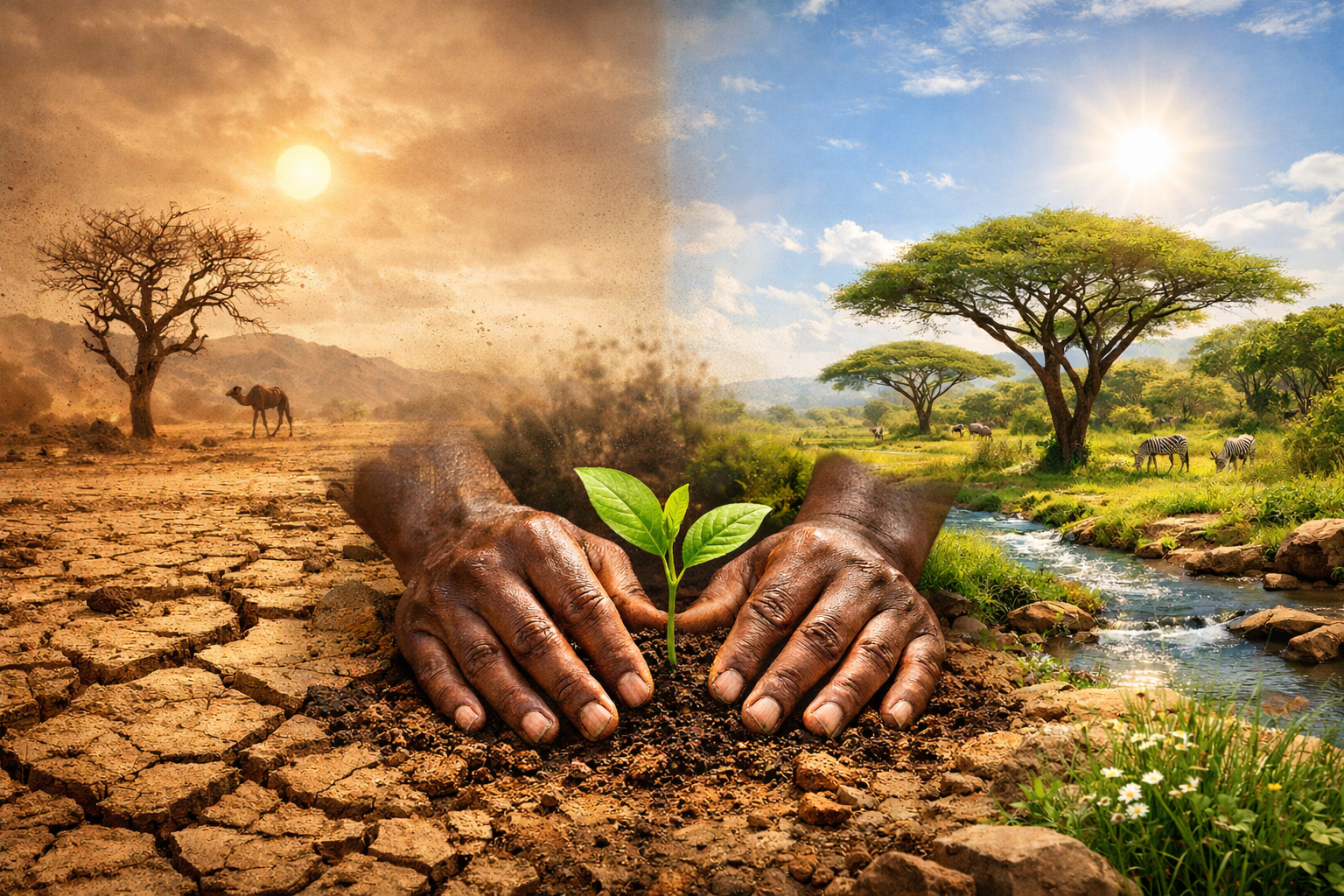
The environmental landscape of Somalia is at a critical crossroads. Over the last thirty years, the country has witnessed a drastic reduction in its forest cover, primarily driven by the unsustainable charcoal trade and overgrazing. At Waara Green Organization, we recognize that reforestation is not merely an aesthetic endeavor but a vital scientific necessity to reverse land degradation and ensure national climate security.
1. Reversing Desertification through Soil Sequestration
Scientifically, trees are the primary defense against desertification. In arid and semi-arid regions like Somalia, the soil often loses its organic carbon content, leading to “soil fatigue.”
- Carbon Sequestration: Trees capture atmospheric CO2 and store it in their biomass and the soil. This process improves soil structure and fertility.
- Micro-climate Regulation: Large-scale planting creates a “canopy effect” that reduces ground temperature by as much as 3°C to 5°C, preventing the sun from baking the soil into an impermeable crust.
2. The Hydrological Cycle and Groundwater Recharge
One of the most significant scientific benefits of reforestation is its impact on the Hydrological Cycle. Somalia suffers from “flash floods” followed by extreme drought.
- Infiltration Runoff: Trees slow down rainwater runoff, allowing water to infiltrate the ground and recharge underground aquifers (our primary source of water).
- Transpiration: Trees release water vapor into the atmosphere through their leaves, which contributes to local cloud formation and increases the likelihood of consistent rainfall patterns.
3. Combatting the “Charcoal Crisis” with Sustainable Silviculture
The demand for energy has led to the decimation of the Acacia bussei (the Somali Myrrh tree). From a conservation biology perspective, losing these indigenous species disrupts the entire food chain.
- Biodiversity Loss: When we lose indigenous forests, we lose the pollinators (bees and birds) essential for local agriculture.
- Sustainable Alternatives: Waara Green Organization advocates for Silviculture—the science of growing and cultivating trees—to create sustainable woodlots that provide energy without destroying natural forests.
4. Economic Resilience and Ecosystem Services
In environmental economics, forests provide “Ecosystem Services” that are worth millions of dollars. For Somalia, this includes:
- Windbreaks: Trees protect agricultural crops from strong, hot winds that dry out
- Natural Fertilizers: Leguminous trees (like certain Acacia species) fix nitrogen into the soil, reducing the need for expensive chemical fertilizers.
Key Native Species for Reforestation in Somalia
To ensure a successful reforestation program, Waara Green Organization prioritizes native species that are biologically adapted to our climate. Below is a scientific breakdown of key trees and their ecological roles:
| Tree Species (Scientific Name) | Local Name | Ecological Primary Benefit | Economic/Social Use |
| Acacia bussei | Galool | Excellent for soil stabilization and nitrogen fixation. | Historically used for high-quality charcoal (needs protection). |
|
Acacia tortilis |
Qurac |
Provides shade and acts as a major windbreak in arid zones. | Essential fodder for livestock (camels and goats). |
| Ziziphus mauritiana |
Gobb |
High drought resistance; prevents soil erosion near riverbanks. | Produces edible fruits (high in Vitamin C) and honey production. |
| Conocarpus lancifolius |
Damas |
Rapid growth; ideal for urban greening and coastal protection. | Used for boat building and construction timber. |
| Terminalia | Hareeri | Deep root system that helps in | Durable wood used for traditional |
| Tree Species (Scientific Name) | Local Name | Ecological Primary Benefit | Economic/Social Use |
| prunioides | groundwater recharge. | tool handles. |
Why Focus on Native Species?
Using native species rather than invasive exotic trees is a core principle of our restoration strategy. Scientifically, this offers three main advantages:
- Water Efficiency: Native trees like the Galool or Qurac have evolved to survive on minimal rainfall by developing deep taproots.
- Pest Resistance: Local trees have natural immunity to indigenous insects and diseases, reducing the need for chemical intervention.
- Supporting Local Fauna: These trees provide the specific nectar and nesting sites required by Somali birds and pollinators.
Conclusion: A Call to Scientific Action
Reforestation is the most cost-effective technology we have to fight climate change. However, it requires a strategic approach—planting the right tree, in the right place, for the right reason. At Waara Green Organization, we are committed to using ecological data to restore Somalia’s green heritage.